




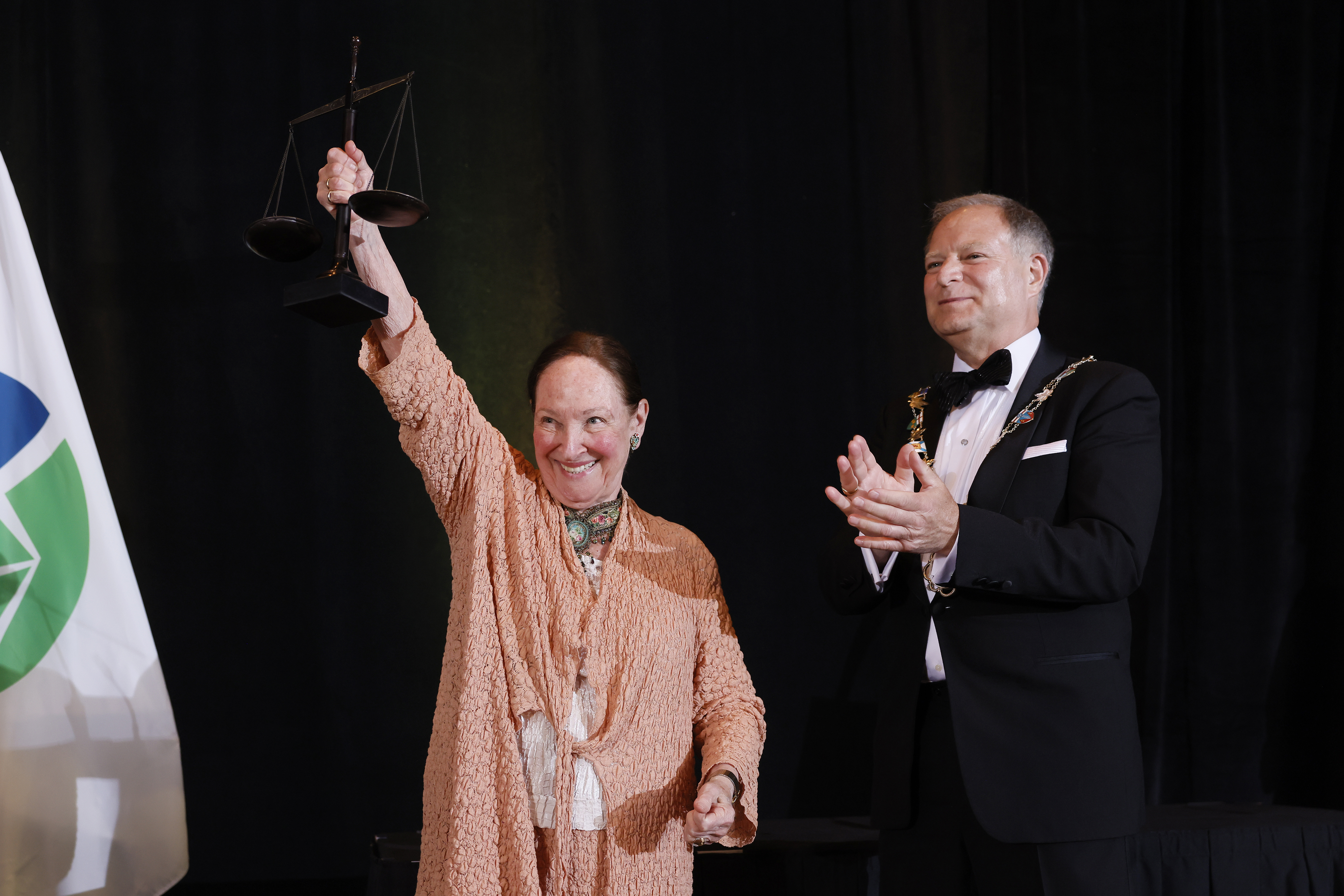





by Maxwell Brodie, winner of the 2025 Paul Smith Memorial Award.
Introduction
Privative clauses are an uncomfortable topic in administrative law. Judicial challenges to these legislative provisions engage competing interests of respecting legislative intent and defending the rule of law. In 1981, the Supreme Court of Canada in Crevier v. Quebec struck down a privative clause which would have insulated “jurisdictional” errors on the basis that such a clause violated section 96 of the Constitution Act 1867.1 As time progresses and the language of “jurisdiction” falls continually out of fashion in Canadian administrative law, interpreting the Supreme Court’s 1981 decision within the modern Vavilovian2 paradigm is increasingly challenging.
Part 1 of this essay analyzes the current state of the law on privative clauses. After outlining recent conflicting judgments from appellate courts, Crevier is explored in greater detail to understand its applicability today. Then, the notion of “jurisdiction” and its evolution in Canadian administrative law is discussed. Part 2 considers the possible paths forward. Two recent attempts at modernizing Crevier are analyzed. The first is Paul Daly’s proposal to guarantee reasonableness review; the other is Mark Mancini’s argument in favour of guaranteeing the review of errors of law.
This paper argues that case law on legislatively enacted standards of review defeats the argument that reasonableness review is constitutionally guaranteed. At the same time, Crevier’s guarantee of judicial review for “jurisdictional errors” should be understood to include some modern-day errors of fact. The result is that expressions of the constitutional limits of privative clauses remain trapped in “jurisdictional” language, fitting awkwardly in our post-jurisdictionalparadigm. Despite its awkwardness, it is argued that Crevier remains a workable and principled framework for balancing the principles of the rule of law and legislative supremacy.
Part 1: Where we are
I. The Disagreement
With the rise of the administrative state, legislatures have increasingly sought to limit the ability of courts to conduct judicial review of administrative decisions. Authors often trace the growth of privative clauses back to trade union legislation in the 1940s.3 Now, they are commonplace. The decision to include a privative clause is frequently justified with reference to the policy considerations of judicial economy, expediency, administrative expertise, and finality in the administrative process.4 While privative clauses can help realize these policy objectives, they can also threaten the rule of law. Indeed, judicial review is “intimately connected” to the preservation of the rule of law and seeks to ensure all exercise of public authority finds its source in law.5 The rule of law, in turn, is a central constitutional principle. It is explicitly referenced in the preamble to the 1982 Constitution and implicitly found in the preamble to the 1867 Constitution, which states that Canada has a constitution “similar in principle to that of the United Kingdom.”6 A plethora of Supreme Court authorities also reinforce the centrality of the rule of law.7 Privative clauses thus live at the nexus of two constitutional titans: (1) the respect for the will of democratically elected legislatures to limit judicial oversight and (2) the duty of courts to ensure the individual-state relationship is governed by law.
Over the past 5 years, a division has arisen across trial and appellate courts regarding the legality and limits of privative clauses. Intense debate on privative clauses is not exclusive to Canada. In 2019, the UK Supreme Court split four ways on the permissible limits of “ouster clauses”.8 It is now worth exploring a few key recent Canadian cases to highlight the nature of the disagreement among courts.
In Canada v. Best Buy,9 the Attorney General of Canada appealed a decision from the Canadian International Trade Tribunal (CITT) which classified television stands as “parts” of a television rather than “furniture”.10 Canada argued that the CITT had erred in law and on questions of mixed fact and law. Although unanimously dismissing the appeal, the Federal Court of Appeal split on what issues were reviewable. In the minority, Justice Near notes that section 67(3) of the Customs Act insulates any finding or declaration made by the CITT from review except as provided by section 68. Section 68(1) states:
“any parties to an appeal under section 67…may…appeal therefrom to the Federal Court of Appeal on any question of law.”11
From this provision, Justice Near held that the court could not review questions of fact or mixed fact and law. He then found no errors of law and dismissed the appeal.12
Writing for the majority, Justice Gleason held that at least some questions of fact must be reviewable even in the presence of the privative clause in section 67(3) and the appeal clause in 68(1) of the Customs Act. These questions could not be reviewed on appellate standards of review but rather through an application for judicial review. Justice Gleason cites Professor Paul Daly’s view that Vavilov establishes a constitutional guarantee of reasonableness review, such that legislatures cannot oust such review through a privative clause.13 Insofar as factual errors can lead to unreasonable decisions, Justice Gleason concludes that a privative clause cannot oust review of factual determinations.14 This is consistent with Vavilov’s position that “the existence of a circumscribed right of appeal in a statutory scheme does not on its own preclude applications for judicial review of decisions.”15 Although Justice Gleason’s comments on the limits of privative clauses are obiter,16 her reasons are cited approvingly, albeit with limited discussion, in several Federal Court of Appeal cases.17 Nevertheless, her reasons have not been unanimously accepted by other courts or commentators.18
Recently, the Federal Court of Appeal again considered the limits of privative clauses in Democracy Watch v. Canada. Although obiter, Chief Justice de Montigny’s reasons disagree with Justice Gleason’s viewpoint in Best Buy. The Chief Justice rejects the notion that reasonableness review is constitutionally guaranteed.19 He stresses the Supreme Court’s emphasis on respecting legislative intent and institutional design, which he sees as reinforcing the requirement to apply partial privative clauses.20 Chief Justice de Montigny supports Crevier’s reliance on the notion of “jurisdictional errors” to ground the limits of privative clauses: a privative clause can insulate anything other than jurisdictional errors.21 Importantly, the Chief Justice’s reasons were not endorsed by Justices Boivin and LeBlanc, who instead opted not to address the limits of privative clauses and simply noted the disagreement across appellate benches on this issue.22
Some of the disagreement is attributable to the fact that Vavilov does not address if or how a privative clause can oust the jurisdiction of the courts to conduct judicial review. Although the issue of the limits of privative clauses reached the Supreme Court in 2024, the court opted to “leave that question for another day”.23 We thus lack a recent declaration from the Supreme Court on the permissibility of privative clauses. To unpack the dispute raging across lower courts, it is instructive to look back at Crevier, the leading Supreme Court authority on privative clauses.
II. Returning to Crevier
In Crevier, the Supreme Court held that a privative clause cannot completely oust judicial review. The court found that section 96 of the Constitution Act 1867 guaranteed the right of courts to review “questions of jurisdiction”.24 But this is not obvious from the wording of section 96. The seemingly unremarkable wording of sections 96 through 100 of the Constitution Act 1867 masks theirimmeasurable importance to the constitutional order.
On their surface, sections 96 through 100 govern the appointment, selection, tenure, termination, and salaries of the judges of the superior courts. In fact, these provisions do much more. They implicitly guarantee the core and inherent jurisdiction of superior courts (also referred to as “section 96 courts”).25 The notion of inherent jurisdiction encompasses several concepts and has been described as amorphous, peculiar, and ubiquitous.26 For one, it prevents the provincial or federal orders of government from taking away certain powers of the superior courts. Thus, among other elements, section 96 acts as a “brake” on provincial jurisdiction to legislate on the “administration of justice in the province” under section 92(14) of the Constitution Act 1867.27 Within the concept of inherent jurisdiction are also the necessary powers for superior courts to properly function as courts.28 This includes powers relating to punishment of contempt, preventing abuse of process, and making orders to meaningfully allow for the execution of their judgments (e.g. issuing injunctions).29 Without these core powers, courts would be unable to fulfill the judicial function of administering justice.30 There is therefore an important connection between the rule of law and the core jurisdiction of superior courts in sections 96 through 100.31 If courts are to fulfill their constitutional function of protecting the rule of law, they must be ascribed the necessary powers to do so.
As judicial review is intimately connected to the rule of law,32 so too is it connected to the core jurisdiction of section 96 courts. If legislatures could completely oust the jurisdiction of superior courts to review administrative decision-makers, superior courts’ constitutional mandate to defend the rule of law would be left unfulfilled. Legislatures could effectively create statutory bodies which act as parallel superior courts, bypassing the constitutional framework of sections 96 through 100.33 Crevier seeks to prevent such a scenario by empowering section 96 courts with the core (and unremovable) jurisdiction to correct "errors of jurisdiction”. Thus, an over-encompassing privative clause commits two wrongs: (1) it deprives the superior courts of their inherent jurisdiction, and (2) it unconstitutionally creates a parallel section 96 court. Note, Crevier’s constitutional guarantee to review jurisdictional errors also applies to the Federal Courts, despite being a statutory court created under section 101 of the Constitution Act 1867. Parliament’s intent in creating the Federal Courts was to give them the power to judicially review federal administrative decision-makers as a section 96 court.34 Thus, Crevier equally guarantees that the Federal Courts can review jurisdictional errors of federal administrative decision-makers.
Yet, as the notion of jurisdiction evolved in administrative law, the Supreme Court’s statement in Crevier became increasingly ambiguous. The modern-day categories of errors of fact, law, and mixed fact and law do not fit easily within the notion of jurisdictional error in Crevier. Nevertheless, Crevier itself provides some guidance. In Crevier, the court writes:
“it is now unquestioned that privative clauses may, when properly framed, effectively oust judicial review on questions of law and, indeed, on other issues not touching jurisdiction.”35
Crevier thus contemplates the ability of legislatures to exclude review of some questions of law. Yet, the notion of “questions of law” as used in Crevier is distinct from what Justices Near and Gleason meant by the same term in Best Buy. At the time of Crevier, errors were classified into three categories: errors of law, fact, and jurisdiction.36 Nowadays, where questions are divided into the categories of fact, law, and mixed fact and law, many questions of law clearly fall within Crevier’s understanding of jurisdiction.37 Otherwise, Crevier would be rendered meaningless. But what exactly did Crevier mean byjurisdictional questions?
III. The Evolution of Jurisdiction in Administrative Law
To understand jurisdictional questions, it is relevant to consider the development of administrative law leading up to and beyond Crevier. The old era of Canadian administrative law is sometimes referred to as the “jurisdictional era”.38 Back then, courts would intervene only if the administrative decision-maker had exceeded their jurisdiction (i.e. acted ultra vires). This approach can be understood as a “scope of review” system, where the reviewability of a decision is determined by considering whether the alleged error was non-jurisdictional (within the body’s jurisdiction) or jurisdictional (exceeding jurisdiction).39 A privative clause could insulate non-jurisdictional errors from any review, thereby protecting legislative intent. However, where an error related to the jurisdiction of the decision-maker, courts would intervene even in the presence of a privative clause. In addition to protecting the rule of law, the justification for intervening was to defend legislative intent. By policing jurisdictional boundaries, courts gave teeth to Parliament’s intended limits for the administrative decision-maker. In that era, Canada’s approach to administrative law strongly mirrored that in the UK.40
This began to change in the late 1970s, particularly with CUPE v. NB Liquor.41 CUPE marked a shift to an “intensity of review” framework, whereby administrative decisions were presumptively reviewable along a variable scale of intensity in the form of standards of review.42 In CUPE, heard a few years before Crevier, the Supreme Court held that a “patently unreasonable” error of law made within the jurisdiction of the decision-maker could be reviewed despite a privative clause limiting review to jurisdictional errors.43 This introduced a new consideration to the prior jurisdictional/non-jurisdictional dichotomy. Post-CUPE, patently unreasonable decisions made within an administrative body’s jurisdiction were deemed to be jurisdictional errors. While CUPE concerned an error of law, errors of fact have equally been classified as patently unreasonable.44 Thus, many years prior to Crevier, a patently unreasonable factual error was noted to be reviewable even in the presence of a privative clause.45 In other words, CUPE provides that patent unreasonableness review is constitutionally guaranteed, regardless of the presence of a privative clause. Crevier did not seek to overturn CUPE on this point. Therefore, as noted by Justice Gleason in Best Buy, Crevier’s understanding of jurisdictional errors includes some errors of fact.
Over time, the notion of jurisdiction became increasingly vague, expansive, and hard to delineate.46 But further, the transition towards a system of variable intensity of review gave privative clauses a new role in determining the level of intensity (expressed through the notion of deference) that courts ought to show when carrying out judicial review.47 A privative clause became a signal that courts should apply a more deferential standard of review.48 However, this new role for privative clauses, as a factor relevant to determining the standard of review, was eventually taken away in Vavilov. Privative clauses now play no role in determining the appropriate standard of review to be employed by courts in reviewing administrative decisions.49
We are thus in the awkward position where Vavilov solidifies that modern judicial review in Canada follows the intensity of review schema; yet the constitutional limits of privative clauses remain articulated in the terminology and framework of the scope of review schema. Despite a move in the early years of the transition to the intensity of review schema to include the existence of a privative clause as a relevant factor to determining the standard of review, Vavilov rejects such an approach. Thus, the Supreme Court authority addressing the limits of privative clauses – Crevier – uses language from the jurisdictional era of administrative law which stands at odds with Vavilov’slanguage and schema. The Supreme Court has not clarified how we ought to incorporate Crevier’s jurisdictional language into this post-jurisdictional paradigm. At the very least, we can note that Crevier’s jurisdictional errors can include modern-day questions of law and fact.
Nevertheless, questions persist around what aspects of the modern intensity of review model are constitutionally guaranteed (beyond the reach of a privative clause) and which aspects can be lawfully removed by a legislature’s command.50 It is now worth exploring how some courts and commentators have attempted to solve this.
IV. A Guarantee of Reasonableness Review?
Professor Daly argues that the core constitutional guarantee, immune from privative clauses, is reasonableness review. This view accounts for Dunsmuir’scollapsing of the common law standards of patent unreasonableness review and reasonableness simpliciter into the single standard of reasonableness. To many, Vavilov added teeth to the argument that reasonableness review is constitutionally guaranteed by noting:
“the reasonableness standard will enable courts to fulfill their constitutional duty to ensure that administrative bodies have acted within the scope of their lawful authority.”51
Professor Daly argues that the use of the phrase “constitutional duty” reveals that reasonableness review is constitutionally guaranteed under section 96 of the Constitution Act 1867.52 But this pushes the Supreme Court’s statement too far. Adapting Vavilov’s statement into a hypothetical syllogism, we get: if courts conduct reasonableness review, then they fulfill their constitutional duty. Professor Daly seems to argue that this implies that if courts do not conduct reasonableness review, then they fail to fulfill their constitutional duty. But this conclusion cannot be validly drawn. One cannot deny the antecedent to derive the negation of the consequent – this would fall prey to the fallacy of “denying the antecedent”.53 Stating that reasonableness review enables the court to fulfill their constitutional duty does not imply that fulfilling courts’ constitutional duty requires reasonableness review. Indeed, it would also be correct to state that correctness review enables courts to fulfill their constitutional duty. But of course, correctness review is not always constitutionally required. Further, reasonableness does not always enable the court to fulfill its constitutional duty. Correctness review is constitutionally required, for example, when interpreting aboriginal treaty rights under section 35 of the Constitution Act 1982 or on questions regarding the division of powers between Parliament and the provinces.54 Therefore, the above quote from Vavilov does not support the argument that reasonableness review is constitutionally guaranteed.
Another central challenge to the argument that reasonableness review is constitutionally guaranteed is that Vavilov has not eliminated “patent unreasonableness” as a standard of review. Vavilov stresses the importance of deferring to legislatively prescribed standards of review, reinforcing legislative intent as the “polar star” of administrative law.55 Several provincial statutes continue to specify that their province’s administrative decision-makers are to be reviewed on the standard of review of patent unreasonableness. This includes British Columbia’s Administrative Tribunals Act, Ontario’s Human Rights Code, Alberta’s Sovereignty Act, and others.56 Thus, it is crucial to examine how courts have treated these legislative signals to adopt a standard of review more deferential than reasonableness review.
A leading Supreme Court authority on this issue is Canada v. Khosa.57 When referencing BC’s Administrative Tribunals Act and its entrenchment of the patent unreasonableness standard of review, Justice Binnie wrote:
“the content of the expression [patent unreasonableness], and the precise degree of deference it commands in the diverse circumstances of a large provincial administration, will necessarily continue to be calibrated according to general principles of administrative law.”58
There are several ways of understanding this statement. One approach is to say that, now that patent unreasonableness and reasonableness simpliciter were collapsed at common law into the single standard of reasonableness, patent unreasonableness should be read as reasonableness. This appears to be the approach taken in Ontario when interpreting the legislated standard of patent unreasonableness prescribed under section 45.8 of Ontario’s Human Rights Code. After Dunsmuir, the Ontario courts read the phrase “patent unreasonableness” under the Code as synonymous with reasonableness under Dunsmuir.59 However, following Vavilov and its emphasis on the ability of legislatures to override the presumption of reasonableness, a question arose as to whether courts should continue to apply reasonableness review despite the wording of the Human Rights Code.
In Intercounty Tennis Association v. Human Rights Tribunal of Ontario,60 the Divisional Court sought to answer the question of whether Vavilov implicitly overruled the prior approach of the Divisional Court in applying reasonableness review under the Human Rights Code. The Divisional Court in Intercounty Tennis concluded:
“Nowhere in Vavilov does the Court identify the merger of the reasonableness and patent unreasonableness standards as being one of the features of Dunsmuir that it is seeking to revise. Furthermore, to reintroduce the distinction would be contrary to the Court’s stated purpose in Vavilov – to clarify and simplify the law of judicial review.
[…]
For these reasons I find that the words “patent unreasonableness” in the Code are to be given the meaning ascribed to them in Shaw v. Phipps – namely, reasonableness.”61
This decision was followed by the Ontario Court of Appeal in Ontario v. Association of Ontario Midwives.62 The Ontario Court of Appeal stated that the legislative intent behind the Code’s enshrining of patent unreasonableness was simply to apply the most deferential standard of review available at common law.Thus, to the Ontario Court of Appeal, Vavilov’scall to respect legislative intent was not undermined by applying reasonableness review.63 The Court of Appeal’s decision in Midwives has been widely adopted by Ontario courts.64 However, some decisions have avoided selecting a standard of review when not strictly necessary to resolve the case (i.e. when applying patent unreasonableness or reasonableness review would lead to the same conclusion).65
The argument in Midwives for applying reasonableness review relies on the premise that the purpose of the legislation was to prescribe the most deferential standard of review at common law. This premise is, at best, questionable. When section 45.8 of the Human Rights Code was enacted, it was indeed the case that the legislature enacted the most deferential standard at common law – patent unreasonableness review. But if the legislature had (through some time machine) the choice between patent unreasonableness and Vavilovian reasonableness review, the legislature may still have opted for patent unreasonableness review, even if the legislature were to know that patent unreasonableness disappeared at common law. At the time when section 45.8 was enacted, patent unreasonableness review was the most deferential standard of review at common law and (per CUPE) the minimum standard of review guaranteed by the constitution. After Dunsmuir, it is at least arguable that the minimum standard of review required by the constitution is different (and lower) than common law reasonableness review. One could argue that the purpose of section 45.8 was to provide the lowest possible standard of review permitted by the constitution, not simply the lowest at common law. Additionally, it is evident that the express wording of the legislature is contradictory to the approach in Midwives. While the Supreme Court has made clear that “statutory interpretation cannot be founded on the wording of the legislation alone”,66 it is unsatisfactory to interpret a statute in a way which contradicts its express wording. As the Supreme Court recently unanimously affirmed, the starting point in statutory interpretation should be the ordinary, grammatical and natural meaning of the text.67 Finally, although Justice Binnie in Khosa stated that general administrative law principles in modern jurisprudence will help guide the interpretation of patent unreasonableness, it also made clear that, in at least some form, patent unreasonableness will “live on” where prescribed by statute.68 Midwives kills patent unreasonableness entirely.
The alternative approach to Midwives is to recognize a distinction between the legislated standard of patent unreasonableness and the common law reasonableness standard of review. The BC Court of Appeal, in adopting this approach, has continued to apply patent unreasonableness review where so prescribed by statute according to its pre-Dunsmuir understanding. In Pacific Newspaper Group Inc v. CEP Local 2000,69 the BC Court of Appeal rejected an argument that the legislative standard of patent unreasonableness should be read as synonymous with reasonableness review post-Dunsmuir, instead opting to apply the pre-Dunsmuir case of Law Society of New Brunswick v. Ryan to define the standard.70 The court found that such an approach was consistent with Justice Binnie’s comment in Khosa. Writing for the unanimous court in Pacific Newspaper, Justice Tysoe concluded:
“All I believe [Justice Binnie] was endeavouring to say was that, just as the meaning of patent unreasonableness changed at common law before Dunsmuir, it is susceptible to change after Dunsmuir. If he had intended to say that the standard of patent unreasonableness in British Columbia will correspond to the standard of reasonableness at common law post-Dunsmuir, he would have done so explicitly.”71
BC courts have continued to apply and cite Pacific Newspaper approvingly after Vavilov.72 This approach is also followed by courts in Alberta when interpreting the legislated patent unreasonableness standard of review in assorted pieces of Albertan legislation.73
The Supreme Court appears to have implicitly adopted this approach in British Columbia (Workers’ Compensation Appeal Tribunal) v. Fraser Health Authority.74 Both the majority and minority of the Supreme Court rely on pre-Dunsmuir case law to define patent unreasonableness.75 Further, when the court in Vavilov states that legislatively enacted standards of care should be respected, the court references several cases where the patent unreasonableness standard was applied.76
Therefore, despite the disappearance of more deferential patent unreasonableness standard at common law, the standard persists in several provincial statutes. By-in-large, courts have applied pre-Dunsmuir patent unreasonableness jurisprudence in such cases. Such an approach is consistent with Vavilov’s call to respect legislatively enacted standard of review clauses. This further undermines the viewpoint that reasonableness review is guaranteed under section 96 of the Constitution. The result is that Crevier’s guarantee of the court’s supervisory jurisdiction over jurisdictional errors, which includes patently unreasonable decisions, remains the core guarantee of judicial review. Despite several modernizations in administrative law, the core constitutional limits of judicial review continue to be definable only through the language of the jurisdictional era.
Part 2: Where we can go
If the Supreme Court takes up the issue of privative clauses, it may seek to change Crevier to account for the challenges described earlier. The extensive changes to administrative law since Crevier have contributed to the attenuation of the precedent, rightfully raising questions as to whether the precedent should be departed from by the Supreme Court.77 This section discusses two potential reforms to the Crevier framework.78 First, this essay considers whether the Supreme Court should change the law to make reasonableness review a constitutional guarantee. While case law conflicts with the idea that this position is currently the law, it is worth considering the desirability of changing the law in favour of such an approach. Second, Mancini’s proposal to guarantee judicial review of errors of law is discussed. After highlighting the strengths and weaknesses of each approach, this essay argues that the Supreme Court should keep Crevier as the framework to regulate privative clauses.
I. Guaranteeing Reasonableness Review
Some argue a guarantee of reasonableness review would beneficially advance the lawin an appropriately incremental fashion.79 For one, it would update the language on the limits of privative clauses to be in line with the modern post-jurisdictional era, accomplishing Vavilov’s aim of abolishing analyses of jurisdictional questions.80 Such an approach – reinforcing the primacy of Vavilovian reasonableness review – mirrors the ethos of the Supreme Court when it recently addressed another issue left unresolved in Vavilov, that of reviewing secondary legislation.81 Guaranteeing reasonableness review has the effect of constitutionalizing the common law standard of review analysis. This collapses the questions of what the constitution demands and what Vavilov proposes into one and the same. Ultimately, this could cement an administrative culture of justification, transparency and intelligibility.82
Yet, such an approach requires the reconsideration of case law on legislatively enacted standards of review. Patent unreasonableness would die once and for all, although the exact mechanism by which courts may bring this about is unclear. Courts could view legislation enshrining patent unreasonableness review as a violation of section 96 of the Constitution and read down the provision to reasonableness review. Alternatively, courts may apply the principle of constitutional conformity and re-interpret patent unreasonableness to mean reasonableness review.83 Regardless, this departs from Fraser Health Authority and Binnie J’s dictum in Khosa.
A more overarching challenge to guaranteeing reasonableness review is that it undermines legislative intent and the democracy principle. If reasonableness review is constitutionally guaranteed, a privative clause is a dead letter. The story of the privative clause’s role in administrative law will finally come to an end with its demise, with the common law absorbing the place previously taken up by the legislature.84 Yet, legislatures can have legitimate and broadly supported objectives in limiting judicial review.85 While undoubtedly the courts will need to ensure legislatures do not overstep, constitutionally guaranteeing reasonableness review would severely restrict the legislature’s relevance in regulating the supervisory role of the courts. Courts and legislatures should play a role in articulating the appropriate judicial oversight of the administrative process.
II. Guaranteeing Review of Errors of Law
Professor Mancini has argued that judicial review of errors of law should be constitutionally protected.86 This approach also moves past jurisdictional language and allows legislatively enacted patent unreasonableness review to operate where the alleged error is one of fact or mixed fact and law. Compared to Professor Daly’s proposal, this approach provides much greater space for the legislature in regulating judicial review. Mancini also notes that this approach retains an important aspect of legislative intent. Through privative clauses, legislatures seek to completely exclude certain kinds of issues from judicial review, not merely alter the standard of review (as was done under Dunsmuir).87
The modern-day category of error of law includes some issues which may not fall within the category of errors of jurisdiction.88 As mentioned, Crevier contemplates certain errors of law which fall outside its constitutional guarantee of judicial review for jurisdictional issues.89 One argument in favour of substituting Crevier’s guarantee of review for jurisdictional errors with review for errors of law is that guaranteeing the latter better protects the rule of law. Lyon has argued that the rule of law, at its core, seeks to ensure all exercise of power is rooted in some legal authority.90 Mancini highlights that the significant Supreme Court cases articulating the rule of law concur in making this connection. In Reference Re Secession of Quebec, a unanimous court quotes from Provincial Judges Reference in stating that the rule of law ensures “all public power finds its ultimate source in a legal rule.”91 Such a conception arguably grounds the rule of law more closely to the broad notion of properly exercising legal authority as opposed to a narrower notion of staying within the jurisdiction. While this could be addressed by broadening the notion of “jurisdiction”, this can make the term too vague, expansive, and better encapsulated simply by protecting errors of law.92
Yet, courts seek not only to protect the rule of law, but also legislative intent.93 When courts strike down errors of jurisdiction, one of the justifications is to enforce the legislature’s intended boundaries for that decision-maker. When decision-makers act in excess of jurisdiction, they contravene the legislature’s choices in establishing the decision-maker’s jurisdiction. This democratic positivist conception of the court’s role is not entirely encapsulated by a guarantee of review for errors of law.94 A tribunal’s incorrect factual determination can lead it to seize jurisdiction over a matter which the legislature did not intend for it to seize. A sole guarantee of review for errors of law insufficiently captures this dimension of the courts’ role.
Another problem with Professor Mancini’s approach is its tension with substantial Supreme Court jurisprudence. Justice Gleason’s reasons in Best Buy highlight this well.95 Patently unreasonable factual determinations are deemed jurisdictional. Limiting the constitutional guarantee to the review of errors of law opposes extensive Supreme Court case law which has struck down patently unreasonable factual errors even in the presence of a privative clause purporting to insulate factual determinations.96 Mancini’s response is that some patently unreasonable factual errors are also errors of law. Specifically, he argues that errors of fact made in the absence of any supportive evidence are held to amount to errors of law at common law.97 Yet this response is not entirely satisfactory. This “no evidence” categorization (as a legal error) is quite extraordinary and rare. It is limited to circumstances where, as the name suggests, there is no evidence.98 This is much narrower than patent unreasonableness. The Supreme Court has framed patently unreasonable factual determinations as situations where “the evidence, viewed reasonably, was incapable of supporting the administrative decision-maker’s findings of fact.”99 Even where factual findings are based on some evidence, they can still be patently unreasonable. This discussion also underlines some of the ambiguity surrounding the boundaries between errors of law and errors of fact. Although the law/fact divide is easier to articulate than Crevier’s jurisdictional/non-jurisdictional dichotomy, challenges will persist.
In this context, it is worth noting the UK’s approach to ouster clauses (their equivalent of privative clauses). In Anisminic Ltd v. Foreign Compensation Commission,100 the House of Lords interpreted an ouster clause which purported to oust the administrative decision from being “called in question in any court of law.”101 The Lords concluded that the ouster clause could not oust review of a decision in excess of jurisdiction and that the error of law alleged was thus reviewable. Two conclusions can be drawn from the Lords’ reasoning in Anisminic: (1) UK courts recognize a strong presumption that the language of the ouster clause does not insulate jurisdictional errors, (2) an error of law “is, or is to be treated as, made without jurisdiction and so a nullity.”102
More recently, the UK Supreme Court in R (on the application of Privacy International) v. Investigatory Powers Tribunal faced an ouster clause which sought to make decisions of the Investigatory Powers Tribunal “not … subject to appeal or … [liability or] to be questioned in any court.”103 A plurality found that the clause did not oust review for errors of law, adopting the reasoning in Anisminic. However, the majority suggested (but did not outright confirm) that regardless of the wording of the ouster clause, the High Court’s jurisdiction to review errors of law could not be removed.
These UK authorities draw out several important considerations. First, the concept of jurisdiction is vague and has a propensity to expand. Over time, the category of jurisdictional error grew to overlap nearly entirely with errors of law. Second, the UK’s apex court has attempted to bypass the need to determine the limits of the core constitutional guarantee of judicial review by applying a strong statutory presumption against the ousting of errors of jurisdiction or law. Some commentators powerfully argue this statutory presumption goes too far, amounting to bad faith statutory interpretation to avoid tackling head-on the challenging question of the limits of Westminster’s parliamentary sovereignty, the supposed “bedrock of the British constitution.”104 Indeed, it seems unquestionable that Parliament’s intent and the plain reading of the statutory language in Privacy International was to oust review for errors of law. Nonetheless, Canada can learn lessons from the UK experience. Jurisdictional questions will inherently be challenging to define, and courts must be aware of the cross-jurisdictional tendency for the concept to expand to an unworkably broad category. Secondly, excessively strong statutory presumptions against privative clauses risk undermining the legitimacy of the interpretive exercise and perpetuate uncertainty for the legislature and litigants as to how (if at all) a privative clause could oust errors of jurisdiction or law.
Bringing this back to Mancini’s proposal, substituting the protection of errors of jurisdiction for errors of law will not lead to significant changes if jurisdiction is interpreted as broadly as in the UK. However, this is not the interpretation of jurisdiction in Crevier, which clearly articulates a narrower view of jurisdiction than modern UK cases. Thus, the biggest weakness of Mancini’s proposal is that it would require a reconsideration of a plethora of precedents, making it unlikely to be adopted by the Supreme Court. This aside, several elements also dampen the potential benefits of Mancini’s proposal. While “jurisdiction” has continued to be challenging to define, the category of error of law is not unambiguous either. Additionally, as outlined earlier, the courts’ role in enforcing the legislature’s intended jurisdictional boundaries for administrative decision-makers is not entirely captured by a guarantee of review for errors of law.
III. Sticking with Crevier
Instead of adopting either of the above alternatives, a third option is to keep Crevier and its guarantee of judicial review for jurisdictional errors. Chief Justice de Montigny’s recent reasons in Democracy Watch v. Canada, in obiter,advocate for such an approach:
“the delineation of jurisdictional errors is far from an easy task and has led to the abandonment of this notion for the purpose of determining the issues that must be reviewed on the correctness standard. That being said, courts must strive to infuse content to this concept, as it is the only principled way to harmonize the legislative choice to delegate some decisions to administrative decision-makers and insulate them from review, with the responsibility of the courts to police the boundaries of the delegation.”105
The extent to which courts can helpfully clarify the meaning of jurisdictional questions, as suggested by de Montigny CJ, is questionable. De Montigny CJ acknowledges this is “far from an easy task.”106 Indeed, Dunsmuir and Vavilov suggest the term is invariably plagued with ambiguity. At a minimum, courts should remain alert to the cross-jurisdictional tendency of the concept of jurisdictional questions to expand. Nevertheless, as I now argue, Crevier’s strengths outweigh these challenges.
One advantage of keeping Crevier is that it best adheres to precedent. Legislatively enacted standards of review across the provinces remain enforceable, thereby increasing certainty for litigants. Adherence to precedent also promotes predictability, something particularly desirable for legislatures as they construct the statutory schemes regulating the review of future administrative decisions. Frequent shifts in the legal landscape hinders legislatures’ ability to effectively predict how their legislation will be interpreted by the courts, thereby limiting the ability of legislatures to enact their will through legislation.
Keeping Crevier also better ensures that legislatures can, within limits, bring about policy decisions relating to the supervisory jurisdiction of the courts. Legislatures can vary the standard of review (with patent unreasonableness as a bare minimum) and exclude certain categories of questions (e.g. non-jurisdictional questions of fact) from review. Thus, legislatures retain the competence to legislate on two dimensions of judicial review: its scope (the types of questions that are reviewable) and intensity (the standard of review). Ultimately, legislative schemes regulating the review of the administrative decisions seek to balance a plethora of considerations, including promoting fair and speedy decision-making while simultaneously conserving judicial resources. So long as the constitutional core of the supervisory jurisdiction of the courts is guaranteed, legislatures are best served when courts provide greatest flexibility in constructing administrative schemes. While a departure from Crevier could simplify the courts’ role on review, this simplicity comes at the expense of legislatures’ ability to creatively construct a statutory scheme which best balances the competing policy considerations.
As Chief Justice de Montigny recognizes, there is no perfect solution to the problem of privative clauses. Nonetheless, keeping Crevier is the most desirable path forward. While disputes will arise around the appropriate interpretation of jurisdictional questions, this approach best delineates the role of the courts in a way which respects the rule of law and does not require the overhaul of an abundance of precedent. By ensuring legislatures retain a meaningful role in regulating the supervisory jurisdiction of the courts over administrative decisions, Crevier provides flexibility to legislatures in realizing their policy objectives. Simplicity, although a desirable judicial goal, should not take priority over the principled framework of Crevier.
Conclusion
The Supreme Court’s 1981 decision in Crevier guarantees judicial review for jurisdictional errors. As Canadian administrative law shifted from a scope of review to an intensity of review model of judicial review, the notion of jurisdictional error fit awkwardly within the modern framework. Although praised for adding clarity to administrative law, Vavilov intentionally left open several questions, including the permissible limits of privative clauses. In Vavilov’s wake, appellate courts have rendered conflicting judgments on this issue. As these divergent cases pile up, it is essential to resolve the tension and clarify the constitutional core of judicial review.
Surveying cases from the time of Crevier shows that jurisdictional errors should be understood to include some modern-day questions of law, fact, and mixed fact and law. While some have argued that Vavilov implicitly entrenches reasonableness review as a constitutional guarantee, this essay has opposed this position. A majority of cases, including those from the Supreme Court, show a willingness to apply patent unreasonableness review when prescribed by statute. Vavilov’s spirit, which reinforces the primacy of legislative intent, accords with this. Therefore, Crevier’s guarantee of review of jurisdictional errors remains the applicable standard. Until the Supreme Court takes up the issue, jurisdictional questions persist.
Several academics have advanced paths that could be taken up by the Supreme Court if they were to redefine the limits of privative clauses. Professor Daly’s proposal to guarantee reasonableness review would add greater simplicity to administrative law by emphasizing the centrality of Vavilovian reasonableness review. Yet, such an approach unduly undermines legislative intent. Legislatures should retain the ability to modify, within limits, the scope and intensity of judicial review based on policy decisions. Professor Mancini, by contrast, has argued in favour of guaranteeing review for errors of law. Such an approach recognizes the inherent problems in delineating the notion of jurisdiction. However, his requires a reconsideration of the Supreme Court jurisprudence which recognizes that some errors of fact cannot be insulated from review. Indeed, factual errors can pose an important threat to the rule of law.
Instead, it is preferable to keep Crevier’s jurisdictional questions as the core guarantee of judicial review. This best realizes the twin interests of protecting the rule of law and legislative intent. Although the notion of jurisdiction fits awkwardly in modern administrative law, courts should prioritize principle over simplicity. While jurisdictional questions will remain difficult to define, one should not expect an easy solution to the thorny issue of privative clauses.